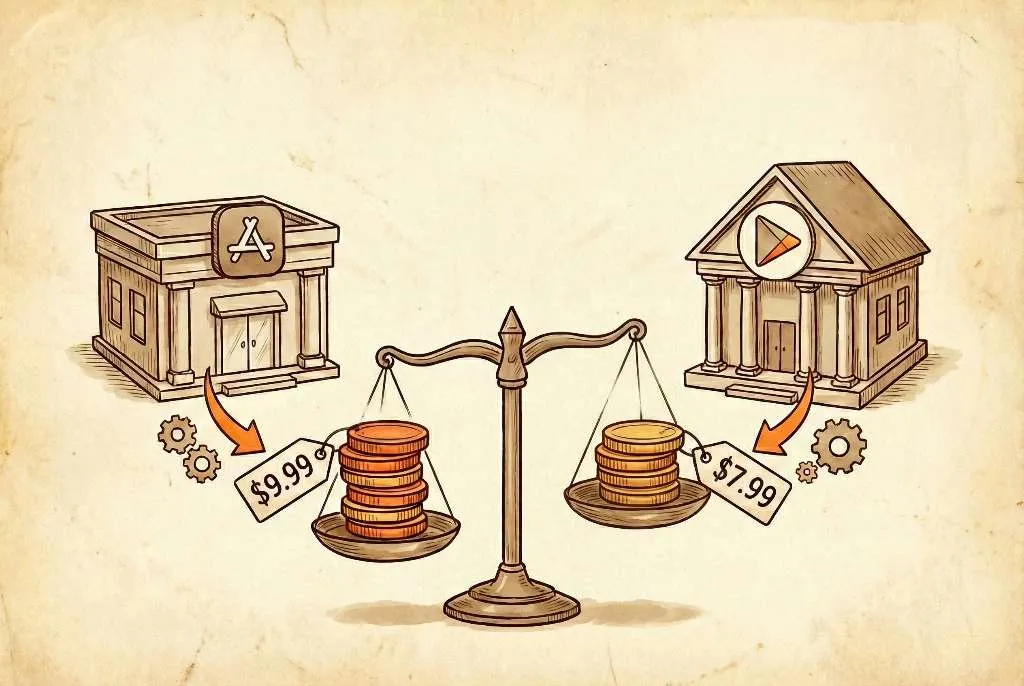
A practical guide to setting app prices by country on iOS and Android, with tiers, taxes, and rollout tips.
If you publish apps globally, country-based pricing can improve conversion in price-sensitive markets while protecting revenue in premium regions. Both iOS and Android provide tools to manage pricing by country or currency, but the workflow still requires a clear strategy.
For broader context, see How to Set Up Subscription Prices.
This applies to one-time purchases, subscriptions, and in-app purchases. Each model has different expectations around affordability and price sensitivity, so your country tiers may vary by product type.
Apple App Store pricing is managed in App Store Connect through price tiers and territory availability. In practice, you choose a price point and then adjust where needed to reflect local market conditions. Always review the latest Apple documentation for pricing and tax details.
If you offer subscriptions, check how introductory offers and free trials map to local pricing tiers. The displayed price should match the tier you intend for that market, not just the converted base price.
Google Play pricing allows you to set a base price and manage prices across countries. You can review per-country pricing and adjust for specific markets. As with iOS, check current Google Play documentation for any updates.
For both stores, it helps to decide whether you will manage prices manually or rely on automatic conversions. Automatic conversions save time but can misalign with affordability, which is why many teams still override key markets.
Using tiers helps you avoid a unique price for every market:
If you want to model tiers quickly, try the subscription pricing calculator.
For apps with both free and paid plans, ensure your value tier does not undercut the perceived value of premium plans in higher-income markets.
Taxes and fees can change the displayed price at checkout. Make sure:
Also verify how the store presents prices in each region. Some markets expect tax-inclusive pricing, while others add tax at checkout.
A safe rollout plan:
If you see unexpected conversion drops, compare your tier assignments against local competitors and adjust only the outliers before changing the entire list.
For localized strategy ideas, see Localized Pricing Online.
Should iOS and Android prices be the same?
They can be, but platform fee structures and local market norms can justify different pricing by store.
Can I rely on automatic currency conversions?
Automatic conversions save time but can misalign with affordability, so review key markets manually.
How often should I update app prices by country?
Quarterly is a common cadence, with updates when exchange rates or costs change materially.
How do I handle taxes in app pricing?
Confirm whether tax is included or added at checkout and align your list to the price customers see.
How do I reduce cross-region abuse?
Follow platform policies, limit extreme price gaps, and monitor unusual purchase patterns.
Country-based app pricing helps you grow globally without a one-size-fits-all price. Use tiers, align for affordability, and monitor results as you scale.
Written on: Jan 18, 2026