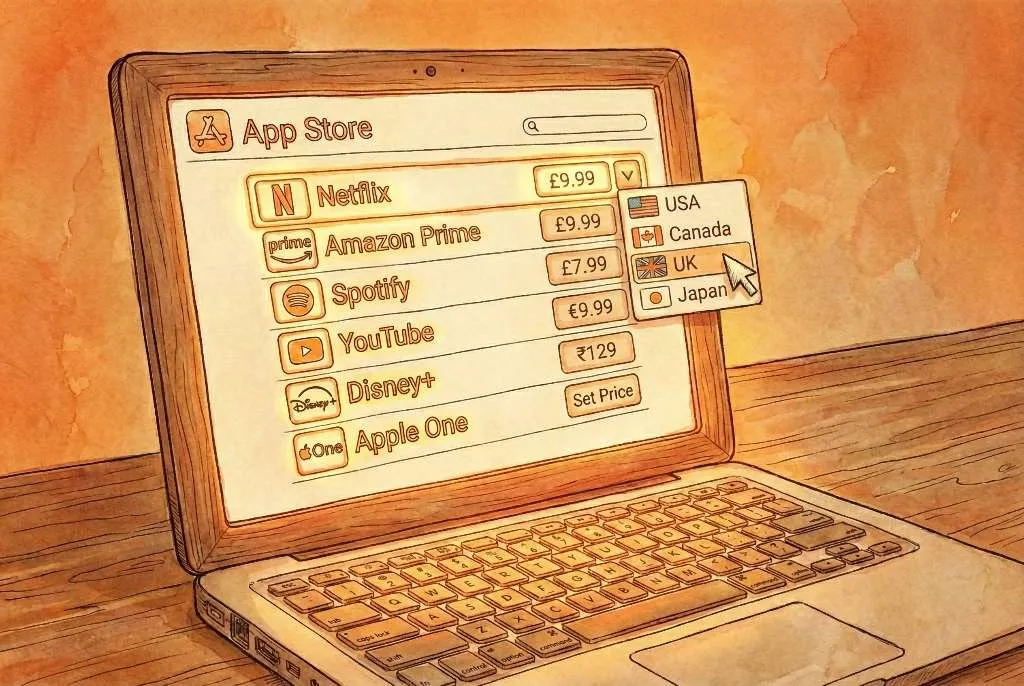
Learn how to set up subscription prices that are competitive and profitable across major platforms and global markets.
Subscription pricing affects customer acquisition, retention, and margin. Whether you’re launching a SaaS platform, a mobile app, a game on Steam, or a subscription box service, pricing strategy should connect customer value with sustainable unit economics while also respecting platform-specific rules and global pricing dynamics.
This guide will walk you through the process of setting up subscription prices that are both competitive and sustainable. We’ll explore factors to consider, platform-specific rules, and how to adjust pricing for different regions.
Before diving into the specifics of platform rules, consider these key factors that will impact your subscription pricing:
Calculate your production, operational, and service delivery costs to ensure your subscription covers expenses while leaving room for profit.
How much is your service worth to customers? Survey your target audience or analyze competitor pricing to understand what customers are willing to pay.
Look at how similar products are priced. Are they using tiered pricing, free trials, or discounts? This will give you a sense of market expectations.
Consider your desired profit margin while ensuring your price is accessible to customers.
Churn rates (the rate at which customers cancel subscriptions) play a big role in pricing strategy. Offering added value or flexible plans can help reduce churn and justify your pricing.
Platform-specific rules matter when setting up subscription prices for mobile apps or games. Each platform has its own guidelines and pricing tools, but most require you to:
Apple, for example, provides a large set of price points and supports regional pricing and tax adjustments through App Store Connect. Steam provides recommended prices by currency based on exchange rates, CPI, and local market conditions, which you can adjust before publishing. If you distribute on other platforms, review their latest documentation to align with their requirements.
| Channel | Platform default | Your guardrail review |
|---|---|---|
| Apple App Store | Supported price points, territories, taxes, and subscription offers | Check margin after platform fees and confirm each storefront price fits your tiering model. |
| Google Play | Country prices, local currencies, tax handling, and subscription offers | Review affordability, payment method coverage, and renewal impact before launch. |
| Steam | Recommended prices by currency for games | Compare recommendations with your own unit economics, genre expectations, and outlier markets. |
| Direct or Stripe billing | Flexible prices, currencies, coupons, and billing rules | Define tax treatment, proration, refunds, and minimum margin before publishing. |
Apple App Store (Subscriptions)
Steam (Games with DLC or Subscriptions)
Direct/Stripe or Website Billing
Selecting the right pricing model for your business depends on your product and target audience. Here are some popular models to consider:
A single subscription fee for access to all content or services. This model is simple and easy for customers to understand.
Offer different levels of service at different price points. This is ideal for SaaS and mobile apps where you can offer basic, premium, or enterprise tiers.
Provide a free basic version of your product, with the option to upgrade to a paid version for additional features. This model is effective for apps and games.
Charge customers based on how much they use the service. This works well for cloud storage or bandwidth-heavy services.
Customers only pay when they use the service, providing flexibility. This is common in SaaS products that cater to businesses with variable needs.
As businesses expand globally, setting the right price for different regions becomes more complex. Account for factors like purchasing power, local competition, taxes, platform rules, and currency fluctuations. Here’s how to approach global pricing:
Many platforms provide pricing tools or recommendations to help align prices by currency and region. Where available, these tools can serve as a starting point before you finalize your own pricing decisions.
When setting prices for international markets, consider the purchasing power in each region. This can help keep prices affordable and competitive without sacrificing profitability.
Many platforms offer the option to either automatically adjust prices based on a base currency or manually manage prices for each region. Choose the option that best fits your business needs.
Make sure your displayed price reflects local tax rules. In many regions, customers expect VAT/GST-inclusive pricing, and billing policies can affect conversion if pricing appears inconsistent at checkout.
Should I use tiered pricing for subscriptions?
Tiered pricing is the most common model because it maps well to different user needs and budgets.
How do platform fees affect my price?
Fees reduce margin, so set your price floor with platform costs in mind before applying discounts.
Do I need different prices by country?
If you sell globally, regional pricing is worth testing when markets have different purchasing power or competition.
How do I set introductory offers?
Keep intro offers short and clearly positioned, then test conversion and retention to validate the discount.
How often should I update subscription prices?
Review quarterly or when costs, exchange rates, or competitive conditions change materially.
Setting up subscription prices requires a careful balance between cost, customer value, and profitability. By understanding platform-specific rules, selecting the right pricing model, and adjusting for global markets, you can build a pricing strategy that can be tested and maintained over time.
For a broader strategy overview, read Mastering the Art of Subscription Pricing.
Whether you’re launching a SaaS product, mobile app, or game, the right pricing tools can help you manage regional prices more effectively. Use our Worldwide Pricing Tool to model region-specific prices wherever your product is available, then validate the results with platform rules and customer data.
If you want a quick way to model country-based prices, try the subscription pricing calculator or explore the Steam pricing calculator.
Written on: Jan 10, 2026