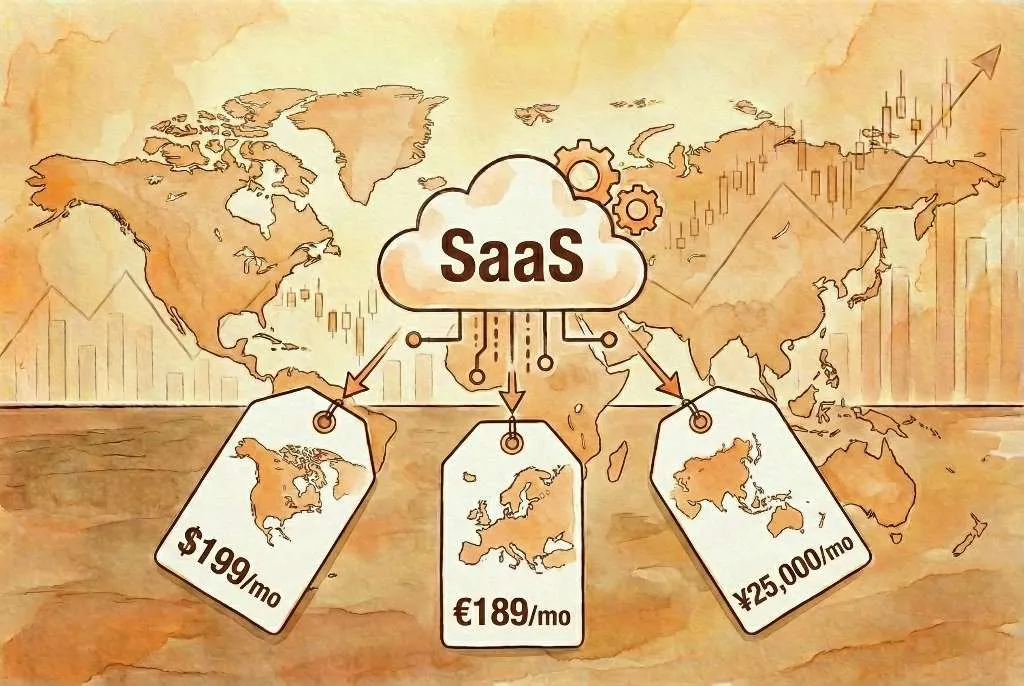
Learn how SaaS teams set country-based tiers, design trials, and protect margins with regional pricing.
SaaS pricing often starts with a single global price, but as soon as you expand internationally, that approach breaks down. Customers in different markets have different purchasing power, competitive alternatives, and expectations about value.
Regional pricing allows you to keep your SaaS product accessible without sacrificing sustainable margins. If you need a broader strategy guide, see Mastering the Art of Subscription Pricing.
It also reduces friction in markets where procurement teams expect local currency pricing or where platform fees change the perceived value of your plan.
Regional pricing is most useful when:
It is especially important when your product is priced per seat or per usage. A per-seat plan that feels reasonable in one market can be out of reach in another, which makes localized tiers and minimum floors essential.
If you are unsure where to start, try the subscription pricing calculator to model country-based prices.
A practical tier structure keeps pricing consistent while reflecting affordability.
Limit tiers to keep operations manageable. A few clean tiers are better than dozens of one-off prices.
Consider whether your tiers map to features or to usage limits. Feature-based tiers often travel better across markets, while usage-based tiers can require stronger local calibration because usage expectations vary.
Imagine a SaaS team with a $29/month Pro plan, a 60% gross margin floor, and early demand from the United States, Germany, Brazil, and India. A useful first pass is not “make every country cheaper.” It is a controlled model:
| Market | Decision to review | Why it matters |
|---|---|---|
| United States | Keep the $29 anchor price | Primary market and reference point for positioning. |
| Germany | Test a near-anchor local price | Similar willingness to pay, but local currency and tax display matter. |
| Brazil | Consider a core-tier price | Lower affordability may require adjustment, but payment fees and taxes need review. |
| India | Consider a value-tier price | Lower purchasing power may support a lower price if support and infrastructure costs stay above floor. |
This is where Worldwide Pricing helps: it turns the base price, target countries, and margin guardrails into a country list that finance and growth teams can review together.
Trials and discounts are powerful tools when used carefully.
You can also adjust trial length by market. In some regions, a shorter trial improves conversion because buyers decide quickly, while in others a longer trial reduces trust friction.
For platform details, see How to Set Up Subscription Prices.
Regional pricing should still protect your unit economics:
If you sell annual plans, confirm that the annual discount does not push value-tier markets below your minimum margin. A small discount in premium markets can be too large in lower-income regions.
A disciplined rollout reduces risk:
Assign ownership for pricing changes, and keep a clear change log. This prevents silent drift in long-running SaaS products where multiple teams touch pricing over time.
Should SaaS prices be in local currency?
Yes, local currency pricing typically improves trust and conversion, especially in price-sensitive markets.
How many tiers should I use for SaaS?
Three tiers (premium, core, value) is a common starting point, with more only if your product is highly segmented.
Do trials need to be the same length everywhere?
Not always. Shorter trials can improve conversion in fast-moving markets, while longer trials can reduce risk in new markets.
Can regional pricing increase churn?
It can if prices drop too low and reduce perceived value. Guardrails and careful rollout reduce this risk.
How do I protect margins in lower-income markets?
Set a firm minimum price floor based on support and infrastructure costs, and review annually or when costs shift.
Regional pricing helps SaaS teams grow globally without losing margin control. If you want to model pricing across countries, try the subscription pricing calculator or the regional pricing tool.
Written on: Jan 25, 2026