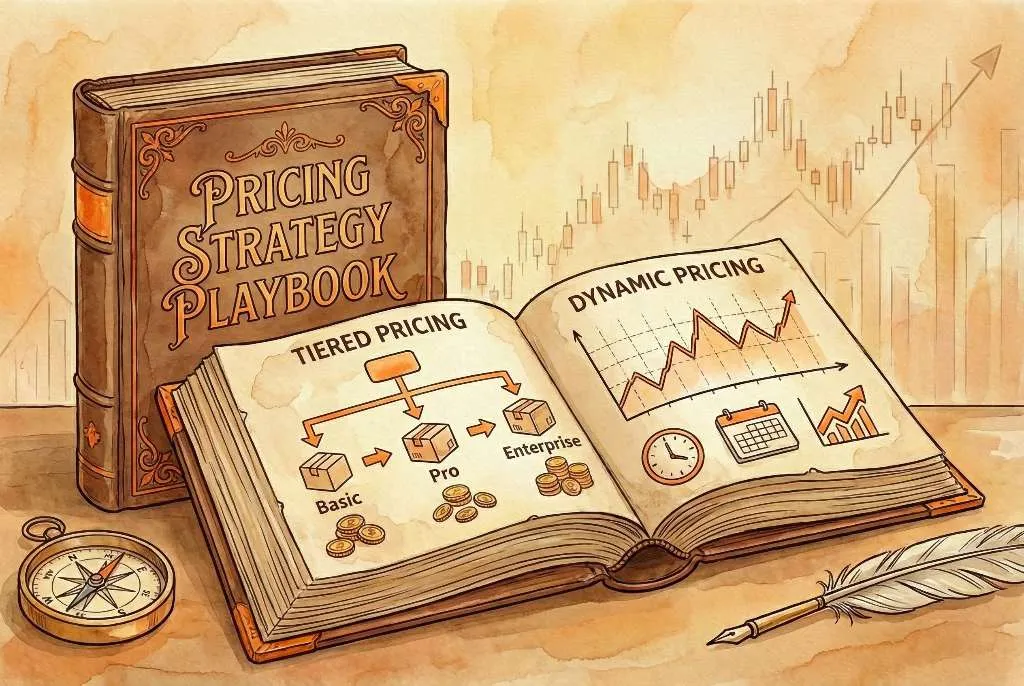
Build a regional pricing strategy with clear guardrails, market tiers, and a repeatable rollout plan.
Regional pricing is not just a currency conversion exercise. It is a strategic decision that balances affordability, competitive positioning, and sustainable margins across markets. Teams that treat regional pricing as a strategy gain more control over revenue, reduce churn in price-sensitive regions, and avoid underpricing in premium markets.
If you want the fundamentals first, see what is regional pricing.
Start by defining the business goals and the guardrails that pricing must respect.
Add a clear price corridor so teams know what is acceptable. For example, you can define a minimum effective discount and a maximum premium relative to your base price. This keeps regional pricing aligned with brand positioning and prevents accidental over-discounting.
It also helps to define which metric matters most in each region. In a value tier, you may optimize for activation and retention. In a premium tier, you may prioritize revenue per user or margin stability.
If you run subscriptions, align this with a pricing framework such as Mastering the Art of Subscription Pricing.
Reliable inputs keep your pricing rational instead of guesswork:
Use PPP and local price level data as a foundation, then layer in competitor context and costs. The regional pricing tool can help you see price differences across countries quickly.
If you have limited data, start with PPP and add competitive benchmarks in your top 5 to 10 markets. A small number of strong inputs is better than a large list of noisy signals.
Tiering simplifies global pricing. A practical model is:
Tiering keeps pricing consistent while still reflecting local conditions.
To assign countries, combine affordability indicators and business priorities. For example, a high-income market with intense competition might belong in a core tier instead of a premium tier if you need stronger price positioning.
Worldwide Pricing is most useful when a team needs to turn a base price into a reviewable country price list. The typical inputs are a base price, cost or profit floor, target countries, and any maximum discount or premium limits. The useful outputs are not just prices; they include local currencies, tier assignments, margin checks, and obvious outliers for human review.
For example, a $29/month SaaS plan with a 60% margin floor might produce value-tier recommendations for India and Brazil, a core-tier recommendation for South Africa, and premium-tier prices for the United States and Germany. The buyer still needs to review taxes, platform rules, sales capacity, and competitor context before publishing, but the tool removes the blank-sheet work and makes the approval conversation concrete.
Rounding rules make price lists look intentional and easier to compare.
Also confirm how taxes and fees affect displayed prices in each market. In regions where tax is included in the listed price, the same nominal price can feel more expensive if tax is added at checkout.
If you need a structured workflow, see how to build a country-based price list.
A smart rollout reduces risk:
Assign ownership so pricing does not drift. Define who updates the price list, how changes are approved, and which metrics trigger a review. A simple cadence (quarterly or semi-annual) keeps pricing current without constant changes.
What is a regional pricing strategy?
It is a structured approach to setting country-based prices using affordability data, competitive context, and margin guardrails.
How many pricing tiers should I use?
Most teams use 3 to 4 tiers to keep pricing manageable without sacrificing local fit.
Should I use PPP or exchange rates?
Use PPP or local price levels for affordability, and use FX only as a conversion baseline.
How often should I update regional prices?
Review quarterly or when exchange rates, costs, or competitive conditions shift materially.
How do I reduce arbitrage risk?
Limit extreme price gaps, align with platform policies, and monitor unusual purchase patterns.
Will regional pricing hurt margins?
It can if discounts are set without a floor. Set minimum margin and price-floor rules before reviewing country outputs.
Can I trust a tool-generated price list?
Use it as a first pass. Trust improves when you review sources, compare outliers, and approve final prices against your own unit economics.
A regional pricing strategy should be repeatable, not reactive. By defining guardrails, using reliable data, and rolling out with discipline, you can build a global price list that feels fair locally while protecting your margins.
If you are ready to model country-based prices, try the regional pricing tool or explore global pricing strategies.
Written on: Jan 29, 2026